
What They Don't Tell You About the "Laptop Killer" Foldable Phone
A single device that folds from a pocketable slab into an expansive tablet, theoretically capable of replacing both your phone and your laptop. The latest iteration, represented by concepts like a hypothetical Samsung Galaxy Z Fold Ultra with a tri-fold design, pushes this further, offering a screen that can unfurl to nearly 10 inches. On a clean, wide desk in a marketing video, it looks like the future. But technology must live in the real world, a world of cramped subway poles, tiny airplane tray tables, and the relentless need for practical efficiency. After living with a leading tri-fold prototype, a stark realization sets in: this form factor often creates more problems than it solves, and your laptop has absolutely nothing to fear.
Let's start with the physical truth. A tri-fold device is an engineering marvel, but also a compromise in mass and dimensions. When folded, it's a thick, heavy brick—often exceeding 300 grams and 15mm in thickness—that feels cumbersome in a pocket. The outer shell is typically a sophisticated armor of aluminum and polymer, housing a modest cover screen. The true spectacle is inside: a seamless polymer-based OLED display that bends twice, with a peak brightness exceeding 2000 nits and a variable refresh rate up to 120Hz. Unfolding it once yields a traditional tablet shape; the second unfold reveals the full canvas, a near-square screen roughly 10 inches diagonally. The hinge mechanism is complex, involving multiple interlocking gears, and it must maintain perfect screen tension to avoid crease visibility. It feels simultaneously fragile and robust, a paradox you're constantly aware of.
The first major friction point emerges in transit, specifically the New York City subway. The premise of whipping out this device to productively use its large screen is laughable. You are likely standing, holding a pole with one hand. Unfolding it fully requires two hands and a surprising amount of lateral space you simply do not have. You risk elbowing a stranger. Even if you manage to unfold it, you cannot safely hold and interact with a 10-inch slate with one hand. The alternative—using it in its single-folded, tablet mode—defeats the entire purpose of the tri-fold design, leaving you with a heavier, thicker version of a standard tablet. The device's brilliant screen is rendered useless by the simple physics of crowded, dynamic environments.

The second act of this comedy plays out on an airplane. You settle in, lower the tray table—a famously constrained space—and envision a productive session. Unfolding the tri-fold device consumes the entire tray. Your coffee cup? No room. A notepad? Forget it. The device becomes a monopolizing presence. Furthermore, the near-square aspect ratio, while great for viewing documents in portrait mode, is awkward for most wide-screen video content, leaving large black bars. You are left with a massive, expensive screen displaying a video window the size of a standard tablet's, all while your seatmate subtly judges your life choices. The promised laptop replacement fails at the most basic ergonomic hurdle: harmonious sharing of physical space with other objects.
Software is the next great hurdle. While the internal Snapdragon processor and 16GB of RAM benchmark impressively, raw power isn't the issue. The operating system and applications struggle with this novel form factor. When fully unfolded, many apps simply stretch to fill the odd aspect ratio, resulting in grotesquely blown-up interfaces with wasted space. A few are optimized, offering multi-pane layouts, but the experience is inconsistent. Attempting real work, like editing a complex spreadsheet or writing a long document, highlights the core deficiency: input. The on-screen keyboard, even split, is a poor substitute for tactile feedback. Pairing a physical Bluetooth keyboard is an option, but now you've added another item to carry, and you must find a surface large enough to accommodate both the unfolded device and the keyboard—bringing us back to the airplane tray table dilemma. A MacBook Air, in contrast, provides a perfectly matched, optimized, and instantly ready clamshell with a superb keyboard and trackpad.
So, where does this experiment leave us? The tri-fold device is a breathtaking showcase of miniaturization and material science. It is ideally suited for a very specific user: a tech enthusiast with a deep budget who consumes media and light documents in stable, spacious environments like a home or office, and who values the novelty of a transforming object above all else. Its camera system, often featuring multiple high-resolution sensors, is excellent, making it a powerful, if bulky, tool for photography.
However, it is a catastrophically poor choice for anyone seeking a genuine laptop replacement for travel or mobile productivity, or for users who prioritize one-handed usability and pocket comfort. The tri-fold solves for maximum screen size in a portable package but ignores the nuanced ecosystem of physical space, peripheral interaction, and software maturity required for actual work. Its fundamental limitation is not technological, but anthropological: it was designed in a lab, not for the lived reality of crowded, messy human environments. Your laptop remains secure not because it's more innovative, but because its design is a time-tested solution to the very real constraints of the world. The tri-fold is fascinating, but for now, it's a solution in search of a problem that most people don't have.
MORE FROM WIRED
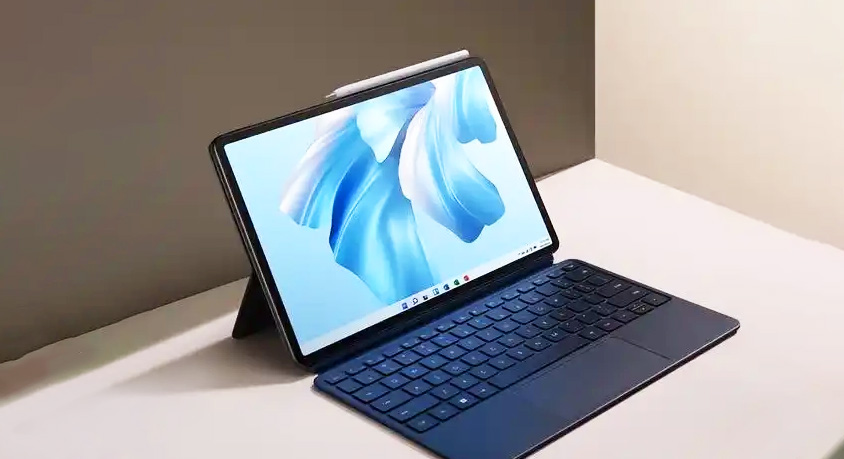
- Huawei MateBook E 2026: 2-in-1 Tablet Laptop for Flexible Scenarios
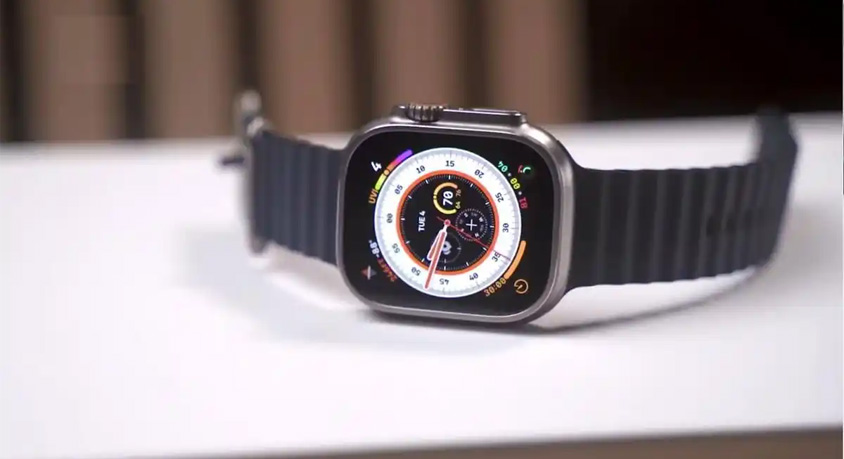
- What happens when an Apple Watch Ultra 3 or rugged phone gets tossed into the dishwasher, buried in snow, or even dropped from a pickup truck?
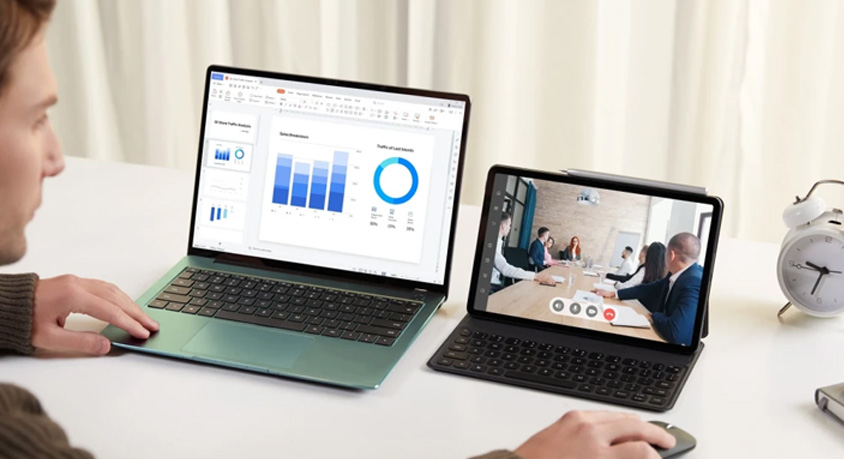
- Why Your iPad Pro Can’t Replace Your Laptop (Yet)
- Jun,13,2026

- 5 Proactive Habits to Extend Your Computer's Lifespan by Years
- Jun,12,2026
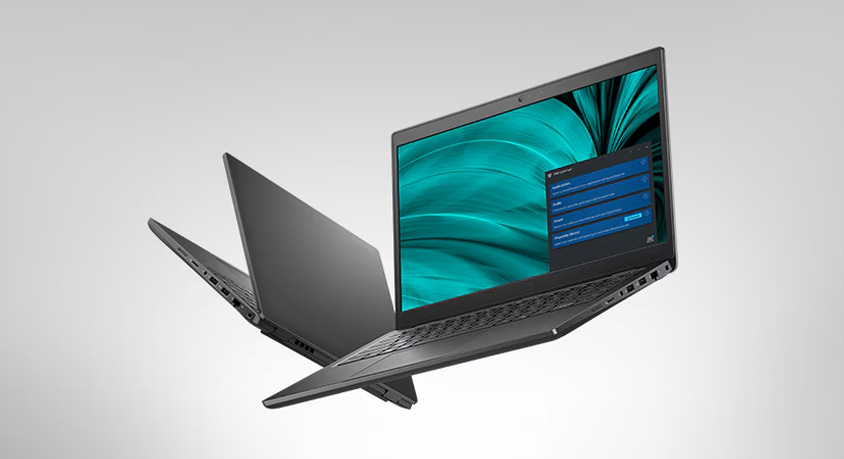
- Dell Latitude 14 2026: Reliable Business Laptop for Mobile Professionals
- Jun,11,2026
- Google Pixel 7: Timeless Minimalism Meets Proven Intelligence
- Jun,10,2026
- OPPO Find X9 Pro Can It Outperform Flagship Rivals
- Jun,09,2026