
Do You Really Need a 1TB Phone Storage
You’re shopping for a new phone, and the sales rep pushes the 1TB model: “You’ll run out of space in 6 months!” You panic, pay extra $100 for it, then realize 6 months later—you’ve only used 200GB. Sound like you? You’re not alone. Every day, millions of people overpay for phone storage they’ll never use, tricked by the myth that “bigger is always better.”
We’ve all been sold the lie that “bigger storage = better phone.” But a recent survey by Counterpoint Research found that 78% of smartphone users never use more than 500GB of storage, even after 2 years of use. Another study by Statista showed that the average user only uses 320GB of storage on their phone, with most of that taken up by photos, social media apps, and a handful of games. Most of us are paying for space we’ll never touch, and it’s a total waste of money that could be spent on things that actually improve our daily experience.
Modern smartphones with 1TB storage look and feel the same as their smaller counterparts—sleek metal frames, glass backs, and slim bodies that fit comfortably in your hand or pocket. They have the same ports, same weight, and same build quality as 256GB or 512GB models. The only difference is a hidden storage chip inside, one that you’ll likely never come close to filling, no matter how much you use your phone. Even the button layout, screen size, and battery life are identical—you’re not getting any extra features, just extra unused space.
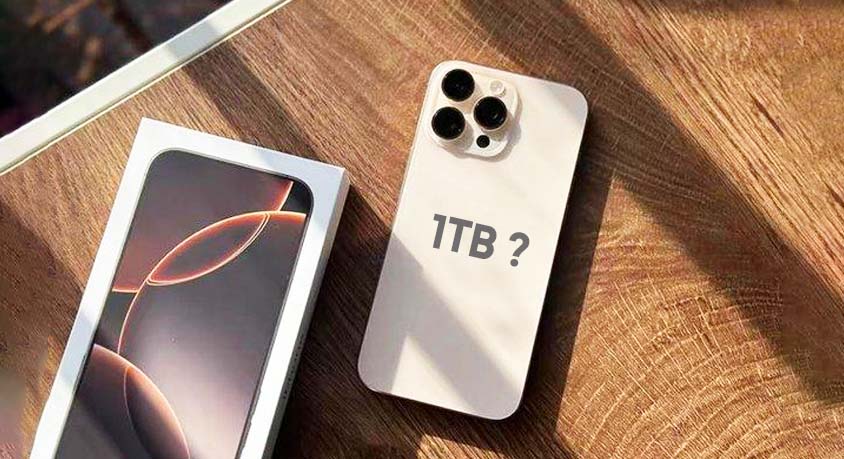
1TB storage does have its place, though. If you’re a content creator who shoots 4K videos daily for social media or work, edits photos on your phone, or downloads dozens of large games (each can take up 10-20GB), 1TB makes sense. It lets you store months of footage, hundreds of high-res photos, and all your favorite games without deleting old files or constantly uploading to the cloud. For travelers who don’t always have access to WiFi, it means you can download movies and shows for long flights without worrying about space.
But for most people, it’s overkill. Let’s be real: You use your phone for scrolling through Instagram, taking photos of your dog or meals, checking emails, and using a few essential apps like maps or messaging. Even if you take 100 photos a week (that’s a lot!), each photo is about 5MB, so that’s only 26GB a year. Add in a few apps (10-20GB total) and some music (5-10GB), and you’re still well under 100GB a year. A 256GB or 512GB phone is more than enough, and it’s cheaper—saving you $80-$150 that could go to a better phone case, a portable charger, or even a nice coffee every week for a month.
The downside of 1TB isn’t just the cost. Phones with larger storage often hold their value worse on the second-hand market, since most buyers don’t need that much space. They also tend to be slightly heavier (though the difference is minimal) and can take a tiny bit longer to boot up, since the larger storage chip has more data to process—nothing noticeable, but still an unnecessary trade-off.
Who should buy a 1TB phone? Content creators, heavy gamers, people who hate using cloud storage, and frequent travelers who need offline access to lots of media. Who shouldn’t? Students, casual users, anyone who deletes old photos or videos regularly, and people who use cloud services like Google Drive or iCloud to back up their files. Save your cash—you don’t need that extra space, and you’ll be happier with the money you keep.
Buying a phone is about matching your needs, not chasing the biggest specs. Don’t let marketers trick you into paying for storage you’ll never use. Pick a capacity that fits your daily habits—256GB for casual users, 512GB if you’re a bit heavier on media—and you’ll get a better value without sacrificing anything important. Tech should work for you, not the other way around, and that means not paying for features you don’t need.
MORE FROM WIRED
- Dell Inspiron 14 Plus 2026: Lightweight Premium Laptop for Urban Daily Productivity
- Dell XPS 13 (2025) Review: Premium Ultrabook, But Not Perfect for Everyone
- Fast Router Never Fixes Slow Home Network
- Jun,03,2026
- OPPO A3 Pro Is It The Best Budget Waterproof Phone
- Jun,02,2026
- vivo X200 Pro: The All-Rounder That Excels in Every Department
- Jun,01,2026
- Is the vivo S50 the Most Balanced Midrange Phone of 2026
- May,31,2026
- vivo Y600 Pro: The Endurance King That Redefines Budget Phones
- May,30,2026