
Fast Router Never Fixes Slow Home Network
Most household users firmly believe that buying an expensive high-end router can completely solve all network lag issues, which is a widely accepted wrong idea in daily digital life. Many people spend hundreds of extra funds to upgrade flagship routers, yet still face freezing video calls and delayed game responses in daily use.
According to the latest global network speed data, the average fixed broadband download speed reaches 250.04Mbps worldwide, while most ordinary families cannot even exert half of the actual network speed they subscribe to. The core reason lies not in insufficient router performance, but unreasonable home network layout and messy wiring habits that most people ignore.
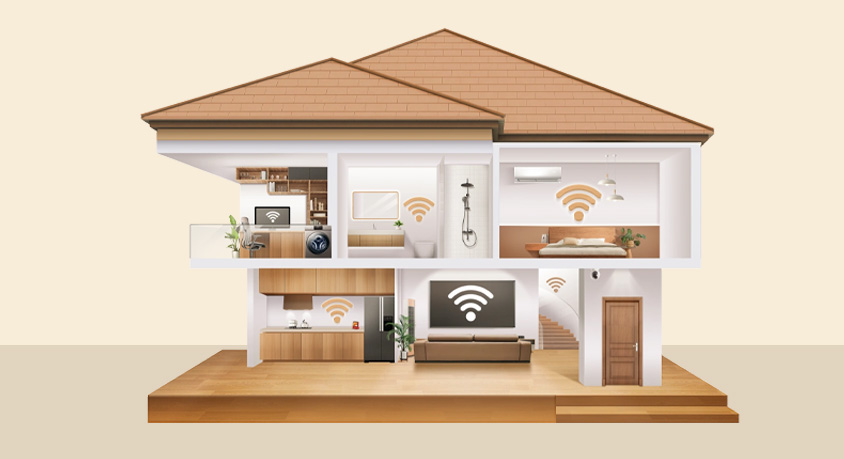
In daily family scenes, walls, metal furniture and household appliances will seriously block wireless signals. Users living in large apartments often find stable network signals only near the optical modem, and the bedroom and balcony areas always maintain weak network connection. Even the latest dual-band wifi devices cannot break through the physical shielding limit in such environments.
Lightweight portable routers feature compact body and simple appearance design, with basic universal interface and moderate overall weight, easy to place in any corner of the room. Their biggest advantage lies in low price and simple setting process, suitable for single room daily browsing and social software use. But such devices lack stable heat dissipation structure, and long-time continuous operation will lead to obvious network speed drop.
High-performance gaming routers adopt high-grade plastic and metal splicing materials, with rich external interfaces to meet multi-device wired connection demands. They perform well in signal transmission and instantaneous network burst speed, perfectly matching the use needs of office workers who need long-distance office video conferences and hardcore players pursuing smooth gaming experience.
These high-spec network devices also have obvious shortcomings. They consume more daily power, and complex function settings will bring extra learning cost to elderly users and digital beginners. Families with few electronic devices and only needing basic internet access do not need to choose such over-configured products at all.
Many users ignore the matching of network cables and power supply environments. Aging low-standard network cables will directly limit the upper limit of broadband transmission speed, and unstable household power supply will cause frequent network disconnection. These trivial details affect network experience far more than router hardware parameters.
For office workers who frequently work from home, reasonable placement of signal extenders is more effective than blindly replacing new routers. For student dormitories and small single rooms, entry-level network equipment can fully meet daily study and entertainment demands without excessive budget waste.
Choosing digital network equipment should start from actual living space and usage demands, rather than blindly following high-configuration consumption trends. Only matching reasonable hardware layout with correct usage habits can make subscribed broadband speed truly serve daily life and work efficiently.
MORE FROM WIRED

- Dell Inspiron 14 Plus 2026: Lightweight Premium Laptop for Urban Daily Productivity

- Dell XPS 13 (2025) Review: Premium Ultrabook, But Not Perfect for Everyone

- OPPO A3 Pro Is It The Best Budget Waterproof Phone
- Jun,02,2026

- vivo X200 Pro: The All-Rounder That Excels in Every Department
- Jun,01,2026

- Is the vivo S50 the Most Balanced Midrange Phone of 2026
- May,31,2026

- vivo Y600 Pro: The Endurance King That Redefines Budget Phones
- May,30,2026

- Is MacBook Neo Worth Its Budget Price
- May,29,2026