
Buying Expensive Flagship Phones Is Often A Waste For Regular Users
The average consumer automatically assumes flagship smartphones deliver far better daily experience, and that spending more equals longer service life and smoother performance. This widely accepted belief has pushed countless ordinary users into overspending on high-end models they never fully utilize, while ignoring mid-range devices that fit real-life needs perfectly.
Market statistics reveal nearly 72% of global smartphone buyers only use basic daily functions: social media browsing, short video streaming, online payment and casual gaming. Flagship chips, professional-grade camera systems and premium high-refresh screens are designed for professional creators, heavy mobile gamers and business users, yet most average people cannot tell difference between flagship and mid-range performance in daily scenarios.
Pick any weekend dining scene in a dimly lit restaurant. Mid-range phones capture food details and group photos with natural color reproduction, totally meeting daily record-sharing needs. Flagship models do offer higher dynamic range and more advanced computational photography, but such professional-level imaging advantages are wasted on users who only post photos to social platforms without post-editing.
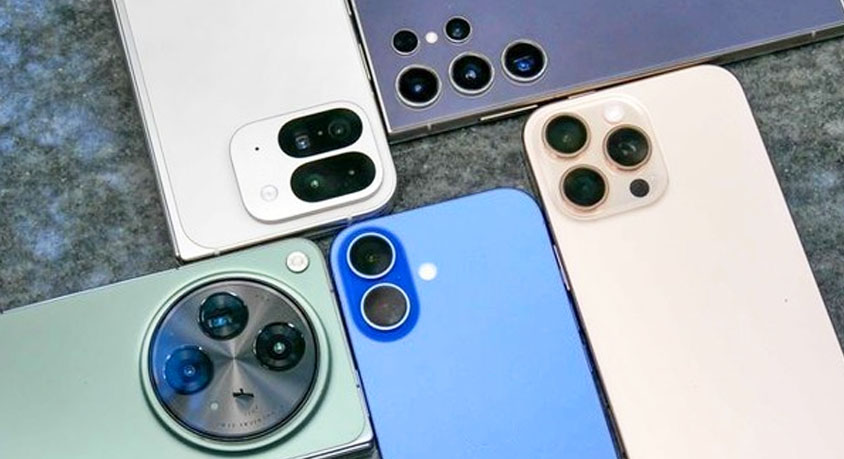
In terms of industrial design and daily grip feeling, modern mid-range phones adopt glass back covers and rounded frame design, with weight controlled around 190 grams, comfortable enough for one-handed long-time use. They retain essential mainstream interfaces and side fingerprint unlocking, removing only redundant professional hardware configurations that regular users never touch. Their system optimization keeps daily operation fluent for three years, matching the actual lifecycle most people replace their phones.
Flagship devices undeniably have clear strengths. They carry top-tier processor performance, ultra-high pixel camera hardware, faster charging speeds and premium material craftsmanship, stable enough to handle heavy gaming, 8K video recording and long-duration high-load work. Yet their obvious downside lies in excessive premium pricing and unnecessary hardware stacking. For students, office workers with light mobile usage and elderly users, most flagship advantages stay unused year after year.
Mid-range smartphones are not without flaws either. They lack top-level gaming frame stability, fall behind in extreme low-light photography, and use slightly inferior charging chip materials. They fit perfectly for daily social, entertainment and light office use, but are not recommended for professional photographers, hardcore gamers or users pursuing ultimate texture and performance.
Technology consumption never means blindly chasing the highest configuration. The smart buying logic is matching hardware strength with personal usage habits. Instead of following the crowd to buy expensive flagship phones, ordinary users can save hundreds in budget while getting almost identical daily experience from well-tuned mid-range models, letting mobile technology serve real life rather than becoming an unnecessary financial burden.
MORE FROM WIRED
- Dell Inspiron 14 Plus 2026: Lightweight Premium Laptop for Urban Daily Productivity
- Dell XPS 13 (2025) Review: Premium Ultrabook, But Not Perfect for Everyone
- Fast Router Never Fixes Slow Home Network
- Jun,03,2026
- OPPO A3 Pro Is It The Best Budget Waterproof Phone
- Jun,02,2026
- vivo X200 Pro: The All-Rounder That Excels in Every Department
- Jun,01,2026
- Is the vivo S50 the Most Balanced Midrange Phone of 2026
- May,31,2026
- vivo Y600 Pro: The Endurance King That Redefines Budget Phones
- May,30,2026